






Corporate sponsors tend to operate with clear business objectives, evaluating their investments against internal metrics like brand visibility, employee engagement, and corporate social responsibility (CSR) goals. Winning next year’s pledge requires verifiable proof that the partnership delivered value.
In this guide, we’ll demonstrate what ROI looks like from a sponsoring company’s perspective, how to find and leverage the data you’re probably already sitting on, and how to keep the partner relationship alive year after year.
What Proving ROI to Corporate Sponsors Actually Means
According to Double the Donation research, over 62% of nonprofits say sponsorships yield the highest ROI among corporate giving initiatives. Because businesses view these arrangements as major investments, they naturally expect clear data detailing their overall return. If you want them to keep coming back, it’s important to provide the metrics corporate decision-makers need to justify their budget allocations.
Why? Most corporate sponsorships tie directly back to internal CSR initiatives. Companies typically require reportable, qualitative, and quantitative proof showing how your partnership helped them fulfill their social responsibility commitments.
Direct Funding vs. In-Kind Donations
Cash sponsorships and corporate grants provide funding for general operations or specific programs. In-kind donations (such as pro bono legal services, catering, software access, or donated event space), on the other hand, represent non-monetary contributions.
Sponsors track these assets at fair market value, so your organization’s impact reports should itemize and acknowledge in-kind gifts with the same rigor as financial contributions.
Why Data Changes the Renewal Conversation
While a general post-event thank-you email expresses gratitude, it does not provide a company with the tools it needs to defend its budget. But when you supply your corporate contact with hard numbers, you give them a compelling business case to present internally.
Specific performance metrics transform a casual conversation into a strategic review. Sharing exact figures on total event attendees reached, net dollars raised for the community, and digital media impressions generated gives your corporate contact clear evidence of success.
This verifiable proof moves your relationship from a one-time charitable contribution to an essential business partnership.
How to Prove the ROI of Your Partnership: Key Tips + Strategies
Now that you know what corporate partners are looking for, it’s time to put that knowledge into action. Use these practical strategies to track, measure, and present your ROI effectively throughout the sponsorships process.
Find the Sponsorship Data You’re Already Sitting On
Fundraisers often assume that demonstrating return on investment requires expensive data collection software or complex post-event surveys. However, most organizations are already sitting on a goldmine of internal data.
We recommend surfacing actionable sponsorship insights by auditing the donor and event records already in your system to avoid this common mistake.
- Leverage Employer Data: Perform regular data enrichment audits to spot clusters of supporters who work for the same employer. These groups can serve as internal corporate champions, advocating for formal sponsorships or workplace giving programs.
- Utilize a Corporate Giving Directory: Tap into a centralized CSR database to research companies’ backgrounds, philanthropic pillars, and giving histories. A tool like Double the Donation allows teams to filter companies by mission category, program type, and submission guidelines so you can target well-aligned corporate partners.
It’s important to treat both of these tasks as ongoing research habits rather than one-time projects. Philanthropic priorities, CSR budgets, and corporate personnel shift frequently. Framing employer tracking and database research as continuous operational practices will allow you to capture new partnership opportunities as they emerge.
Turn Event Data Into a Sponsor-Ready Impact Story
Busy executives typically do not have the bandwidth to analyze rows of unformatted data to determine whether their sponsorship was successful. To drive renewals, package your numbers into a clear, visual impact story structured around the core metrics sponsors care about: reach, engagement, and community goodwill.
Here are a few ways you can do this:
Build a Simple Post-Event Snapshot. Compile a clear summary immediately following an initiative. Outline total attendance, funds raised, volunteer hours contributed, and more. An integrated event management platform makes it easy to capture attendee counts, check-in numbers, and digital participation figures without adding manual work.
Adopt a Professional Impact Report Structure. Structure your post-event update like a formal nonprofit impact report. Use visual callouts, branded graphics, key performance metrics, and a concise narrative summary to optimize your storytelling.
Capture Real-Time Mobile Data. Modern event check-in systems and mobile event apps automatically log session attendance, app clicks, and sponsor banner impressions. That means engagement data sourced through these tools is cleaned, verified, and ready to send before the event even concludes.
Recognize Sponsors in Ways That Make Renewal an Easy Yes
Establishing a reliable stewardship model helps maintain a warm relationship and demonstrates that your organization actively protects its corporate partners’ investments. We recommend…
- Public Recognition: Visibility is often the primary asset a corporate sponsor buys. Ensure your team consistently highlights partners across print materials, digital signage, email newsletters, and social media posts.
- Intentional Stewardship: Use the same thoughtful engagement strategies with corporate partners that you use when thanking event volunteers. Handwritten notes, personalized videos, and physical tokens of appreciation help build strong relationships with corporate decision-makers.
- Connected CSR Outcomes: Frame follow-up discussions around a sponsor’s business objectives. Reviewing how your project directly advanced their corporate social responsibility commitments provides clear justification for contract renewal the next year.
Here’s the bottom line: Sponsors expand partnerships with organizations that make them feel valued throughout the entire year, not just when an invoice is due.
Don’t Overlook Local and Small Businesses as Sponsors
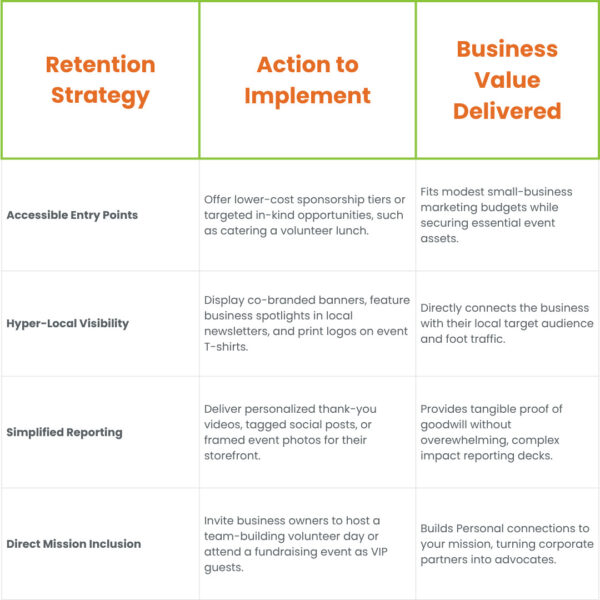
While multinational corporations offer substantial sponsorship packages, local and regional small businesses represent a highly reliable foundation for event revenue. Local business owners are often easier to retain over the long term, and managing these accounts provides valuable practice in refining your reporting and stewardship habits.
Retaining small-business sponsors effectively helps you build a loyal network of sponsors who consistently renew their support year after year.
Organizations that build regular reporting habits stop scrambling during renewal season and build lasting partnerships with confidence.
Proving ROI to corporate sponsors is not a seasonal rush; it’s an ongoing habit. By capturing data as it is generated, packaging metrics around sponsors’ priorities, and providing consistent recognition between asks, your team can transform sponsorship management into a routine operational workflow.
Contributor: Double the Donation
Contributing Author: Adam Weinger